NM Welcomes Amy Heimberger, MD, International Leader in Brain Tumor Research
July 21, 2021 | 3 min. to read
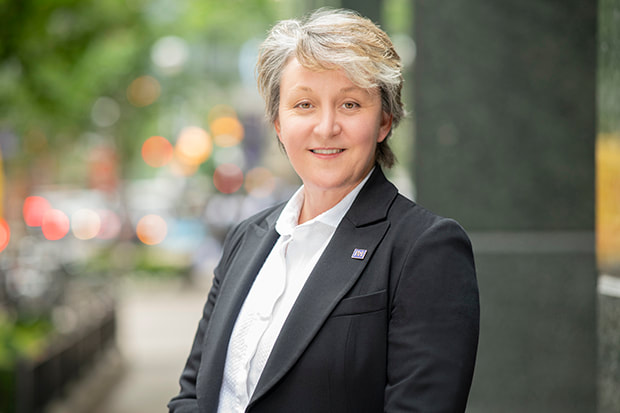
Amy Heimberger, MD, an accomplished neurosurgeon and an international leader in brain tumor research, has joined Northwestern Medicine. Effective May 1, Dr. Heimberger became scientific director of the Lou and Jean Malnati Brain Tumor Institute at the Robert H. Lurie Comprehensive Cancer Center. She also is vice chair of research for Neurosurgery at Northwestern University Feinberg School of Medicine and the Jean Malnati Miller Professor of Neurological Surgery. Dr. Heimberger comes to NM from MD Anderson Cancer Center in Houston, where she had been on staff since 2002.
As a neurosurgeon, Dr. Heimberger specializes in awake craniotomies and brain mapping. As a researcher, she focuses on immune therapies for patients with central nervous system (CNS) malignancies. She has performed critical work on both the development of new therapeutics and their translation to patient care.
As a neurosurgeon, Dr. Heimberger specializes in awake craniotomies and brain mapping. As a researcher, she focuses on immune therapies for patients with central nervous system (CNS) malignancies. She has performed critical work on both the development of new therapeutics and their translation to patient care.
Here, she discusses her goals at NM and her background.
How does your work as a practicing physician and as a research scientist interrelate?
For many years, my time has been split between patients and research. Here, I plan to spend one day in the operating room and one-half day in clinic each week. I work in a very specialized domain, neuro-oncology neurosurgery. The clinical work is synergistic with my research, giving us a real-world view of the needs and effectiveness of therapeutics.
Describe some of your goals for your work.
What makes my lab unusual is the translational focus. Our priority is developing immune therapies that we can apply in the clinic to actual patient care. Our mission is to work in partnership with the patients who need us. As part of that, we do a lot of direct interface with the pharma and device industries, helping research companies refine R&D targets and processes to focus on therapies with more likelihood of success.
My goal is to build a strong conduit between industry, academics and patient care. COVID-19 vaccine research was advanced rapidly because it was an international collaborative effort that involved both public and private domains. I want NM to be the place that industry wants to partner with.
What attracted you to the NM program?
Under the leadership of Matt S. Lesniak, MD, NM’s Brain Tumor Research Program has grown exponentially. Roger Stupp, MD, who has changed the standard of care for glioma patients, came on board in 2017. Then Lurie Cancer Center won a Specialized Program of Research Excellence (SPORE) grant in 2018. The program development here has been tremendous and I see the NM program as the most exciting program to come to.
In Evanston, Northwestern University has one of the world’s premier nanoscience research centers. Nanotechnology is beginning in clinical studies and has promise, including for brain cancer therapies. The presence of the Ann & Robert H. Lurie Children’s Hospital of Chicago also presents amazing opportunities for collaborations in pediatric cancers.
What drew you to a career in medicine and your particular expertise?
I fell in love with science early. I was eight or nine, growing up in a small town in Missouri. My favorite gift was a chemistry set. This was back in the 1970s when the sets had real chemicals. In high school, I competed in science fairs.
After college, I might have gone into science or journalism, but I took a break from schooling for a job at Washington University in St. Louis and, fortuitously, stepped into a new field, immunology, working with some of the stars in the field, like Kenneth Murphy, MD, PhD. It was an exciting experience.
The work is important, deeply engaging and team-driven. People who have brain cancer have a multifaceted problem that impacts them on a fundamental level — how they talk, how they think, who they are. And helping them is not a matter of being the best surgeon or oncologist. It is about the quality and expertise of the team as a whole, because the care is so complex and requires such a diversity of expertise.
View a video in which Dr. Heimberger discusses research in immunotherapy for cancers.
How does your work as a practicing physician and as a research scientist interrelate?
For many years, my time has been split between patients and research. Here, I plan to spend one day in the operating room and one-half day in clinic each week. I work in a very specialized domain, neuro-oncology neurosurgery. The clinical work is synergistic with my research, giving us a real-world view of the needs and effectiveness of therapeutics.
Describe some of your goals for your work.
What makes my lab unusual is the translational focus. Our priority is developing immune therapies that we can apply in the clinic to actual patient care. Our mission is to work in partnership with the patients who need us. As part of that, we do a lot of direct interface with the pharma and device industries, helping research companies refine R&D targets and processes to focus on therapies with more likelihood of success.
My goal is to build a strong conduit between industry, academics and patient care. COVID-19 vaccine research was advanced rapidly because it was an international collaborative effort that involved both public and private domains. I want NM to be the place that industry wants to partner with.
What attracted you to the NM program?
Under the leadership of Matt S. Lesniak, MD, NM’s Brain Tumor Research Program has grown exponentially. Roger Stupp, MD, who has changed the standard of care for glioma patients, came on board in 2017. Then Lurie Cancer Center won a Specialized Program of Research Excellence (SPORE) grant in 2018. The program development here has been tremendous and I see the NM program as the most exciting program to come to.
In Evanston, Northwestern University has one of the world’s premier nanoscience research centers. Nanotechnology is beginning in clinical studies and has promise, including for brain cancer therapies. The presence of the Ann & Robert H. Lurie Children’s Hospital of Chicago also presents amazing opportunities for collaborations in pediatric cancers.
What drew you to a career in medicine and your particular expertise?
I fell in love with science early. I was eight or nine, growing up in a small town in Missouri. My favorite gift was a chemistry set. This was back in the 1970s when the sets had real chemicals. In high school, I competed in science fairs.
After college, I might have gone into science or journalism, but I took a break from schooling for a job at Washington University in St. Louis and, fortuitously, stepped into a new field, immunology, working with some of the stars in the field, like Kenneth Murphy, MD, PhD. It was an exciting experience.
The work is important, deeply engaging and team-driven. People who have brain cancer have a multifaceted problem that impacts them on a fundamental level — how they talk, how they think, who they are. And helping them is not a matter of being the best surgeon or oncologist. It is about the quality and expertise of the team as a whole, because the care is so complex and requires such a diversity of expertise.
View a video in which Dr. Heimberger discusses research in immunotherapy for cancers.
Awards and recognitions
American Society of Clinical Investigators
Presidential Early Career Award for Scientists and Engineers
US News & World Report Top Doctors
Education
Medical degree: Washington University, St. Louis
Residency and research fellowship: Duke University
American Society of Clinical Investigators
Presidential Early Career Award for Scientists and Engineers
US News & World Report Top Doctors
Education
Medical degree: Washington University, St. Louis
Residency and research fellowship: Duke University






© 2024 by Northwestern Medicine® and Northwestern Memorial HealthCare. Northwestern Medicine® is a trademark of Northwestern Memorial HealthCare.

|
Northwestern Memorial
312.926.2000 |
Central DuPage
630.933.1600 |
Lake Forest
847.234.5600 |
Delnor
630.208.3000 |
Kishwaukee
815.756.1521 |
Valley West
815.786.8484 |
Marianjoy
630.909.8000 |
|
©2024 by Northwestern Medicine® and Northwestern Memorial HealthCare. Northwestern Medicine® is a trademark of Northwestern Memorial HealthCare, used by Northwestern University.
|
|