Predictive Modeling to Identify Patient Deterioration
November 20, 2020 | 2 min. to read
Many hospitals devote significant resources to identifying and treating patients who are deteriorating clinically. Until recently, the tools used to determine patient acuity tended to be reactionary; a patient’s condition would already be in decline by the time they were identified as such. These tools also required resources to monitor all patients on a regular basis — even those not at high risk for deterioration.
Northwestern Medicine identified this gap, highlighted patient deterioration as an area of focus, and evaluated various tools and processes to detect deterioration sooner. One of the tools is Epic’s deterioration index (DI) predictive analytics model, which promotes a proactive approach to identifying patient acuity. Epic’s data science team developed and validated this model through more than 100,000 patient encounters across multiple organizations.
Northwestern Medicine identified this gap, highlighted patient deterioration as an area of focus, and evaluated various tools and processes to detect deterioration sooner. One of the tools is Epic’s deterioration index (DI) predictive analytics model, which promotes a proactive approach to identifying patient acuity. Epic’s data science team developed and validated this model through more than 100,000 patient encounters across multiple organizations.
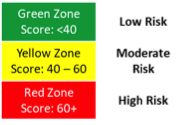
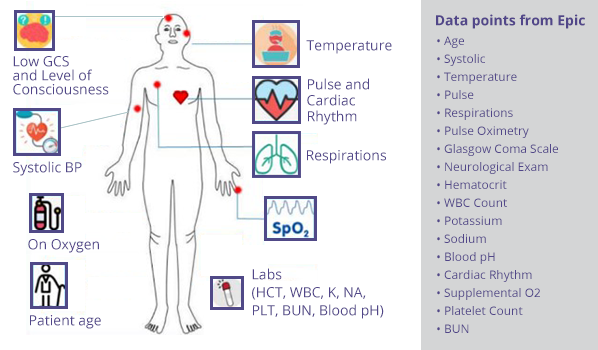
The Epic DI model improves on traditional early warning systems, such as MEWS, by including additional data points. A risk score from zero to 100 is calculated every 15 minutes, incorporating all new information entered into Epic (labs, vitals, assessments). Providers can use this score to stratify patient populations by risk and monitor at-risk patients using trending scores. The model dynamically responds to information entered into the patient’s record through any Epic workflow, providing clinicians with the most up-to-date risk assessment based on the information available in Epic.
After piloting the DI model across multiple hospitals and medical/surgical units, NM has achieved a 15% to 20% decline in unplanned ICU transfers. During the pilot period, the testing team developed a workflow based on feedback from the pilot units. The primary nurse or charge nurse can view scores of their assigned patients or patients on the unit via the patient list. When the nurse identifies an increase in a patient’s risk zone, the next step is to re-evaluate the patient to ensure the model’s determination aligns with clinical assessment. If further escalation is necessary, the nurse contacts the RRT or physician by using the existing escalation path.
Although the workflow and escalation are based on initiation by nurses, the tool is also available to all physicians, advanced practice providers and trainees. You are strongly encouraged to add this column to your patient lists by searching “Deterioration Index Score” to view your patients’ risk scores. In addition to providing information on possible deterioration, the risk score could also be used to prioritize patients for rounding.
NM will continue to evaluate and enable tools that could improve patient outcomes and the workflows of clinical teams. Looking ahead, as the initiative rolls out to all units, the project team welcomes your thoughts and suggestions on how to better incorporate the Epic DI model into daily workflows and identify interventions for specific patient populations. You may share your feedback via the Feedback Form.
For more information about the deterioration index predictive analytics model, please review the Deterioration Epic Tip Sheet.
After piloting the DI model across multiple hospitals and medical/surgical units, NM has achieved a 15% to 20% decline in unplanned ICU transfers. During the pilot period, the testing team developed a workflow based on feedback from the pilot units. The primary nurse or charge nurse can view scores of their assigned patients or patients on the unit via the patient list. When the nurse identifies an increase in a patient’s risk zone, the next step is to re-evaluate the patient to ensure the model’s determination aligns with clinical assessment. If further escalation is necessary, the nurse contacts the RRT or physician by using the existing escalation path.
Although the workflow and escalation are based on initiation by nurses, the tool is also available to all physicians, advanced practice providers and trainees. You are strongly encouraged to add this column to your patient lists by searching “Deterioration Index Score” to view your patients’ risk scores. In addition to providing information on possible deterioration, the risk score could also be used to prioritize patients for rounding.
NM will continue to evaluate and enable tools that could improve patient outcomes and the workflows of clinical teams. Looking ahead, as the initiative rolls out to all units, the project team welcomes your thoughts and suggestions on how to better incorporate the Epic DI model into daily workflows and identify interventions for specific patient populations. You may share your feedback via the Feedback Form.
For more information about the deterioration index predictive analytics model, please review the Deterioration Epic Tip Sheet.






© 2024 by Northwestern Medicine® and Northwestern Memorial HealthCare. Northwestern Medicine® is a trademark of Northwestern Memorial HealthCare.

|
Northwestern Memorial
312.926.2000 |
Central DuPage
630.933.1600 |
Lake Forest
847.234.5600 |
Delnor
630.208.3000 |
Kishwaukee
815.756.1521 |
Valley West
815.786.8484 |
Marianjoy
630.909.8000 |
|
©2024 by Northwestern Medicine® and Northwestern Memorial HealthCare. Northwestern Medicine® is a trademark of Northwestern Memorial HealthCare, used by Northwestern University.
|
|