Neurosurgery Resident Ignites Hope in the Face of Adversity
September 9, 2021 | 9 min. to read
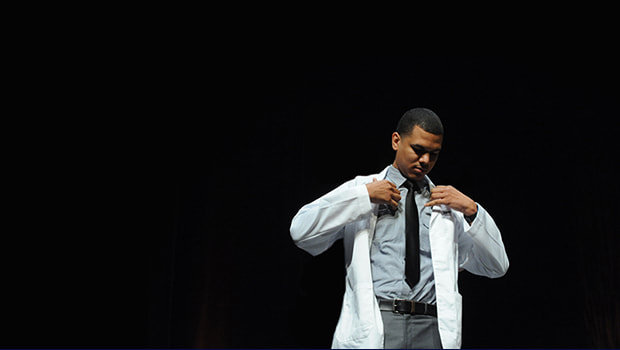
Aaron Palmer, MD, is in his fifth year of neurosurgery residency out of seven at McGaw Medical Center of Northwestern University. He practices at Northwestern Memorial Hospital, with a Neurology and Neurosurgery Program that is ranked No. 9 in the U.S. by U.S. News & World Report, 2021 – 2022. And he loves it. Even on long nights when he's getting paged countless times for emergencies, Dr. Palmer says he "skips to work."
"My colleagues tell me that I smile too much, but I can't stop," he says. "I can't help it."
As a Black male physician, Dr. Palmer is a "minority within a minority": Only 5% of physicians in the U.S. are Black, and a majority of Black physicians are female.
Dr. Palmer derives his happiness from what he's overcome to get to where he is today. His is a story of hope and hard work — a story of why representation matters in medicine.
Hardship and hope
Dr. Palmer grew up in an under-resourced neighborhood of Akron, Ohio. His parents experienced homelessness and would sometimes go without food so that he and his three brothers and sister could eat.
Dr. Palmer says his parents worked hard to support him and his siblings. His mother was a licensed practical nurse and eventually became a registered nurse. His father served in the U.S. Marine Corps and U.S. Navy, became a leader in his community, led a local youth football league and was a tree trimmer.
"As a kid, I had a very difficult time with speech and reading, and was placed in remedial classes because I couldn't keep up with my classmates," says Dr. Palmer. "My parents would come home from a long day at work and focus on my vocabulary and speech impediment. After a few years, I not only caught up to my classmates but was placed in gifted and talented classes because of their dedication."
Life-changing diagnosis
With support from his father, Dr. Palmer became an accomplished football quarterback and eventually earned a scholarship to play football in college. Things seemed to be getting better.
But shortly after Dr. Palmer started college, his dad became sick again with a recurrent esophageal cancer. Dr. Palmer struggled with his grades and lost motivation, even to play football.
Then something changed. In the early 2000s, Dr. Palmer shadowed a Black surgeon who reminded him of his dad.
"Growing up, nobody was a doctor or lawyer in my neighborhood," says Dr. Palmer. "I didn't think those things were in my realm of possibilities."
Shadowing someone who looked like him doing something that he thought was out of reach inspired him to pursue medicine. When his father died in 2010, Dr. Palmer was more motivated than ever to make his dad proud and become a physician.
"I promised my dad I would be the best physician I could possibly be," he said.
Dr. Palmer worked tirelessly to improve his grades so that he could apply to medical school, working several jobs along the way to support himself through his undergraduate years, including finding, fixing and selling cars with his brother. He was accepted to medical school at Wright State University and graduated in the top 5% of his class.
"People don't realize that going to medical school requires so many opportunities, so much funding and so much support, much of which I didn't really have," he says. "It was challenging."
Match day and the match
At the end of medical school, graduating medical students apply to residency programs. On "Match Day" in March, they find out if a residency program accepted them.
Dr. Palmer applied to 50 residency programs and interviewed for about 15 programs across the nation, but he didn't get into any residency program in 2016.
Dr. Palmer was heartbroken. He took a position in general surgery in Grand Rapids, Michigan, to continue his training. If a medical student doesn't match with a residency program upon graduation, the chances of matching the following year drastically decrease.
The next year, Dr. Palmer applied to every neurosurgery program in the nation, including the neurosurgery program at McGaw Medical Center of Northwestern University.
During his interview with Northwestern Medicine, Dr. Palmer said, "If you're looking for someone who is going to produce breakthrough research, I'm not your candidate. But, if you're looking for someone who is going to give back to the community and help those who are less fortunate, I know I could do great work here."
In 2017, after not matching the year before, Dr. Palmer sat alone waiting to find out if he matched with a residency program or not. That's where he learned that he matched at Northwestern Medicine.
'Let's change the world'
Since arriving at Northwestern Medicine, Dr. Palmer's bedside manner has made quite an impact.
"A trauma requiring neurosurgery can happen to anyone in an instant and change everything," says Dr. Palmer. "Suddenly patients are faced with so many uncertainties: How are they going to pay for hospitalization, medications and rehabilitation? How will this impact their family? These things are daunting for any family, especially families of lower socioeconomic status."
Brain surgery is only the beginning. When Dr. Palmer steps out of the operating room, he steps into the community. Apart from volunteering at churches and schools, Dr. Palmer's goal is to work alongside community organizations, legislators and Northwestern Medicine to decrease racial disparities in access to health care and increase the representation of Black men in medicine, using his story to inspire others.
"I'm just the luckiest person in the world that so many people believed in me, and I want to give hope to people like me," he says. "Don't give up. If you have hope and you're willing to work hard, things will come around. Let's change the world."
"My colleagues tell me that I smile too much, but I can't stop," he says. "I can't help it."
As a Black male physician, Dr. Palmer is a "minority within a minority": Only 5% of physicians in the U.S. are Black, and a majority of Black physicians are female.
Dr. Palmer derives his happiness from what he's overcome to get to where he is today. His is a story of hope and hard work — a story of why representation matters in medicine.
Hardship and hope
Dr. Palmer grew up in an under-resourced neighborhood of Akron, Ohio. His parents experienced homelessness and would sometimes go without food so that he and his three brothers and sister could eat.
Dr. Palmer says his parents worked hard to support him and his siblings. His mother was a licensed practical nurse and eventually became a registered nurse. His father served in the U.S. Marine Corps and U.S. Navy, became a leader in his community, led a local youth football league and was a tree trimmer.
"As a kid, I had a very difficult time with speech and reading, and was placed in remedial classes because I couldn't keep up with my classmates," says Dr. Palmer. "My parents would come home from a long day at work and focus on my vocabulary and speech impediment. After a few years, I not only caught up to my classmates but was placed in gifted and talented classes because of their dedication."
Life-changing diagnosis
With support from his father, Dr. Palmer became an accomplished football quarterback and eventually earned a scholarship to play football in college. Things seemed to be getting better.
But shortly after Dr. Palmer started college, his dad became sick again with a recurrent esophageal cancer. Dr. Palmer struggled with his grades and lost motivation, even to play football.
Then something changed. In the early 2000s, Dr. Palmer shadowed a Black surgeon who reminded him of his dad.
"Growing up, nobody was a doctor or lawyer in my neighborhood," says Dr. Palmer. "I didn't think those things were in my realm of possibilities."
Shadowing someone who looked like him doing something that he thought was out of reach inspired him to pursue medicine. When his father died in 2010, Dr. Palmer was more motivated than ever to make his dad proud and become a physician.
"I promised my dad I would be the best physician I could possibly be," he said.
Dr. Palmer worked tirelessly to improve his grades so that he could apply to medical school, working several jobs along the way to support himself through his undergraduate years, including finding, fixing and selling cars with his brother. He was accepted to medical school at Wright State University and graduated in the top 5% of his class.
"People don't realize that going to medical school requires so many opportunities, so much funding and so much support, much of which I didn't really have," he says. "It was challenging."
Match day and the match
At the end of medical school, graduating medical students apply to residency programs. On "Match Day" in March, they find out if a residency program accepted them.
Dr. Palmer applied to 50 residency programs and interviewed for about 15 programs across the nation, but he didn't get into any residency program in 2016.
Dr. Palmer was heartbroken. He took a position in general surgery in Grand Rapids, Michigan, to continue his training. If a medical student doesn't match with a residency program upon graduation, the chances of matching the following year drastically decrease.
The next year, Dr. Palmer applied to every neurosurgery program in the nation, including the neurosurgery program at McGaw Medical Center of Northwestern University.
During his interview with Northwestern Medicine, Dr. Palmer said, "If you're looking for someone who is going to produce breakthrough research, I'm not your candidate. But, if you're looking for someone who is going to give back to the community and help those who are less fortunate, I know I could do great work here."
In 2017, after not matching the year before, Dr. Palmer sat alone waiting to find out if he matched with a residency program or not. That's where he learned that he matched at Northwestern Medicine.
'Let's change the world'
Since arriving at Northwestern Medicine, Dr. Palmer's bedside manner has made quite an impact.
"A trauma requiring neurosurgery can happen to anyone in an instant and change everything," says Dr. Palmer. "Suddenly patients are faced with so many uncertainties: How are they going to pay for hospitalization, medications and rehabilitation? How will this impact their family? These things are daunting for any family, especially families of lower socioeconomic status."
Brain surgery is only the beginning. When Dr. Palmer steps out of the operating room, he steps into the community. Apart from volunteering at churches and schools, Dr. Palmer's goal is to work alongside community organizations, legislators and Northwestern Medicine to decrease racial disparities in access to health care and increase the representation of Black men in medicine, using his story to inspire others.
"I'm just the luckiest person in the world that so many people believed in me, and I want to give hope to people like me," he says. "Don't give up. If you have hope and you're willing to work hard, things will come around. Let's change the world."






© 2024 by Northwestern Medicine® and Northwestern Memorial HealthCare. Northwestern Medicine® is a trademark of Northwestern Memorial HealthCare.

|
Northwestern Memorial
312.926.2000 |
Central DuPage
630.933.1600 |
Lake Forest
847.234.5600 |
Delnor
630.208.3000 |
Kishwaukee
815.756.1521 |
Valley West
815.786.8484 |
Marianjoy
630.909.8000 |
|
©2024 by Northwestern Medicine® and Northwestern Memorial HealthCare. Northwestern Medicine® is a trademark of Northwestern Memorial HealthCare, used by Northwestern University.
|
|