NM Invests in West Region Facility and Service Expansions
March 25, 2021 | 5 min. to read
Major projects underway include a $12 million renovation of the Kishwaukee Hospital Emergency Department, expansion and modernization of the North Naperville Medical Office Building, and laboratory automation throughout the region. Other notable developments include the launch of a behavioral health clinic in Wheaton, the opening of the Kishwaukee Outpatient Infusion Center, and expanded availability of transcarotid artery revascularization (TCAR) throughout the health system.
Kishwaukee Hospital ED renovation
A $12 million renovation of the Kishwaukee Hospital ED began March 15 and is expected to be completed in September 2022. During the renovation, signage will direct patients to temporary waiting areas and a relocated entrance when necessary.
The number of rooms will increase from 23 to 34, including:
A behavioral health suite will feature:
New medical equipment will include:
In addition, a dedicated Security Services office will be embedded within the ED.
A $12 million renovation of the Kishwaukee Hospital ED began March 15 and is expected to be completed in September 2022. During the renovation, signage will direct patients to temporary waiting areas and a relocated entrance when necessary.
The number of rooms will increase from 23 to 34, including:
- Fourteen exam rooms
- Three trauma rooms
- Two isolation rooms
- Three holding bays for patients waiting for results
- Five fast-track rooms, designed to quickly treat patients with mild ailments and injuries, such as sore throat, urinary tract infections and sprained ankles
A behavioral health suite will feature:
- Four treatment bays, designed to promote safety for patients and staff
- An overhead bay door that can be lowered when needed to protect the patient from any equipment that could be used to cause self-harm
New medical equipment will include:
- New stretchers
- A second pneumatic tube station to efficiently send specimens to the lab
- An overflow area equipped with medical gas, which can accommodate additional patients if needed during a surge event
In addition, a dedicated Security Services office will be embedded within the ED.
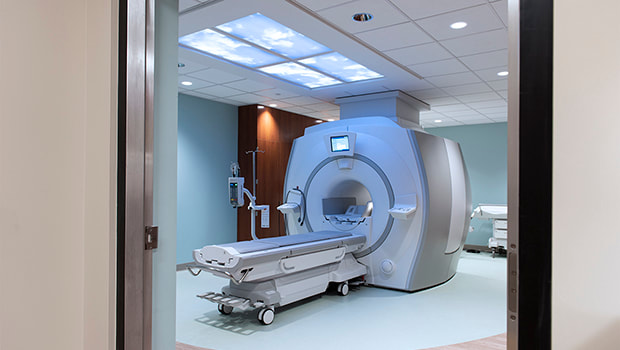
Naperville MOB expansion
The North Naperville Medical Office Building at 636 Raymond Drive, which houses both hospital-based and Regional Medical Group services, is being modernized and expanded. Clinics include:
MRI, obstetrics and gynecology, and orthopaedics are new services at this location.
The North Naperville Medical Office Building at 636 Raymond Drive, which houses both hospital-based and Regional Medical Group services, is being modernized and expanded. Clinics include:
- Dermatology
- Immediate care (to open at the end of June)
- MRI
- Multi-specialty (to open at the end of June)
- Obstetrics and gynecology
- Orthopaedics
- Physical therapy and occupational therapy
- Primary care
MRI, obstetrics and gynecology, and orthopaedics are new services at this location.
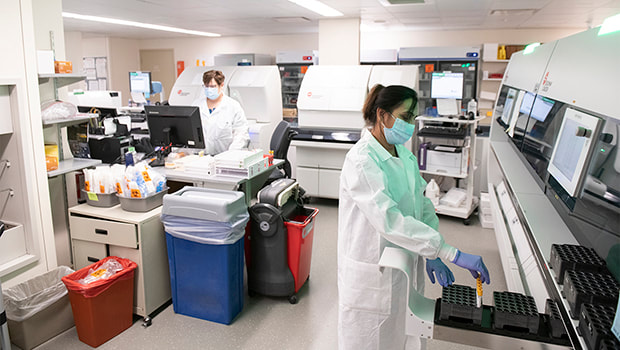
Regionwide lab automation
Delnor Hospital and Kishwaukee Hospital are implementing the new Beckman Coulter DxA 5000 Total Laboratory Automation system — the first hospitals in Northwestern Medicine and among the first in the nation to do so. Meanwhile, Central DuPage Hospital is in the process of installing and validating Beckman Coulter instrumentation and the Beckman Coulter Power Express automation line. Beckman Coulter instrumentation also has been installed at Valley West Hospital, Regional Medical Group sites in DeKalb, and West Region cancer centers.
“The new laboratory equipment is state-of-the-art technology for chemistry, immunoassay testing and laboratory automation,” says Amanda Haynes, director of Clinical Laboratories at Delnor. “It’s exciting that we are at the forefront of medicine and technology.”
Delnor Hospital and Kishwaukee Hospital are implementing the new Beckman Coulter DxA 5000 Total Laboratory Automation system — the first hospitals in Northwestern Medicine and among the first in the nation to do so. Meanwhile, Central DuPage Hospital is in the process of installing and validating Beckman Coulter instrumentation and the Beckman Coulter Power Express automation line. Beckman Coulter instrumentation also has been installed at Valley West Hospital, Regional Medical Group sites in DeKalb, and West Region cancer centers.
“The new laboratory equipment is state-of-the-art technology for chemistry, immunoassay testing and laboratory automation,” says Amanda Haynes, director of Clinical Laboratories at Delnor. “It’s exciting that we are at the forefront of medicine and technology.”
Behavioral health services available in Wheaton
Adolescent programs are now available at a new outpatient behavioral health clinic at 7 Blanchard Circle in Wheaton. Adult programs are anticipated to be available here in the second half of 2021.
Available day-hospital services include in-person group and individual therapies as well as psychiatric support for patients experiencing anxiety, depression, mood disorders, trauma-related disorders or life transition crises.
Adolescent programs are now available at a new outpatient behavioral health clinic at 7 Blanchard Circle in Wheaton. Adult programs are anticipated to be available here in the second half of 2021.
Available day-hospital services include in-person group and individual therapies as well as psychiatric support for patients experiencing anxiety, depression, mood disorders, trauma-related disorders or life transition crises.
Kishwaukee Outpatient Infusion Center now open
The new $1.5 million Kishwaukee Hospital Outpatient Infusion Center (OPIC) opened in late February in suite 201 of the Medical Office Building adjacent to the main hospital. The center has seven private infusion bays with views of the Kishwaukee garden, and rooms include televisions, sound systems and heated recliners to help patients feel more comfortable during their treatments.
The Kishwaukee Pain Clinic, which is also located on the second floor of the MOB, was renovated and given three new exam rooms. The two clinics will share a waiting room but have separate nurse stations.
“Patients can expect the same excellent care that they have been receiving in our prior location in Day Surgery, but now in a beautiful and more private space,” says Leanne Brand Phillips, BSN, BA, MA, CGRN, CNML, manager of the Kishwaukee OPIC. “Having our own space allows for enhanced individuality in care planning.”
The new $1.5 million Kishwaukee Hospital Outpatient Infusion Center (OPIC) opened in late February in suite 201 of the Medical Office Building adjacent to the main hospital. The center has seven private infusion bays with views of the Kishwaukee garden, and rooms include televisions, sound systems and heated recliners to help patients feel more comfortable during their treatments.
The Kishwaukee Pain Clinic, which is also located on the second floor of the MOB, was renovated and given three new exam rooms. The two clinics will share a waiting room but have separate nurse stations.
“Patients can expect the same excellent care that they have been receiving in our prior location in Day Surgery, but now in a beautiful and more private space,” says Leanne Brand Phillips, BSN, BA, MA, CGRN, CNML, manager of the Kishwaukee OPIC. “Having our own space allows for enhanced individuality in care planning.”
TCAR introduced at Central DuPage Hospital
TransCarotid Artery Revascularization (TCAR) — an advanced, less invasive treatment option for carotid artery stenosis — is becoming more widely available across the health system. TCAR was introduced at Northwestern Memorial Hospital in May 2019 by Vascular Surgeon Tadaki M. Tomita, MD, and he brought the procedure to Lake Forest Hospital this February. In the West Region, Vascular Surgeon Sherazuddin Qureshi, MD, has been performing TCAR procedures at Central DuPage Hospital since August 2020.
“I believe TCAR represents the future of minimally invasive carotid artery repair, and our team and I are pleased to be among the first to offer it to our patients,” says Dr. Qureshi.
TCAR provides an advanced way to deliver a stent into a blocked carotid artery, offering an additional option for treatment. Conventional carotid endarterectomy (CEA) continues to play a significant role in carotid artery disease management, but CEA can have a higher risk of surgical complications compared with stenting. Trans-femoral stenting previously was the standard minimally invasive option, but it has a higher stroke rate than CEA and now TCAR.
In the TCAR procedure, through a small incision just above the collarbone, blood flow to the brain is temporarily reversed. Any small bits of plaque or clot that may break off are diverted away from the brain and outside of the patient’s body. This unique flow-reversal technique decreases the stroke risk of carotid artery stenting significantly, reducing the procedural risk of stroke to less than 1.5%. A stent is then placed inside the artery to stabilize the plaque.
The following considerations are recommended when selecting patients for TCAR:
TransCarotid Artery Revascularization (TCAR) — an advanced, less invasive treatment option for carotid artery stenosis — is becoming more widely available across the health system. TCAR was introduced at Northwestern Memorial Hospital in May 2019 by Vascular Surgeon Tadaki M. Tomita, MD, and he brought the procedure to Lake Forest Hospital this February. In the West Region, Vascular Surgeon Sherazuddin Qureshi, MD, has been performing TCAR procedures at Central DuPage Hospital since August 2020.
“I believe TCAR represents the future of minimally invasive carotid artery repair, and our team and I are pleased to be among the first to offer it to our patients,” says Dr. Qureshi.
TCAR provides an advanced way to deliver a stent into a blocked carotid artery, offering an additional option for treatment. Conventional carotid endarterectomy (CEA) continues to play a significant role in carotid artery disease management, but CEA can have a higher risk of surgical complications compared with stenting. Trans-femoral stenting previously was the standard minimally invasive option, but it has a higher stroke rate than CEA and now TCAR.
In the TCAR procedure, through a small incision just above the collarbone, blood flow to the brain is temporarily reversed. Any small bits of plaque or clot that may break off are diverted away from the brain and outside of the patient’s body. This unique flow-reversal technique decreases the stroke risk of carotid artery stenting significantly, reducing the procedural risk of stroke to less than 1.5%. A stent is then placed inside the artery to stabilize the plaque.
The following considerations are recommended when selecting patients for TCAR:
- Any high-risk patient with symptomatic carotid artery stenosis (i.e. the patient has had a transient ischemic attack or stroke) and with a carotid stenosis over 50% should be considered for TCAR.
- Any high-risk patient with asymptomatic carotid artery stenosis greater than 80% stenosis also can be considered for TCAR.
- Some examples of high-risk criteria include age older than 75 years, concomitant coronary artery disease, history of congestive heart failure, uncontrolled diabetes, prior neck radiation, previous CEA with recurrence, and severe pulmonary disease.






© 2024 by Northwestern Medicine® and Northwestern Memorial HealthCare. Northwestern Medicine® is a trademark of Northwestern Memorial HealthCare.

|
Northwestern Memorial
312.926.2000 |
Central DuPage
630.933.1600 |
Lake Forest
847.234.5600 |
Delnor
630.208.3000 |
Kishwaukee
815.756.1521 |
Valley West
815.786.8484 |
Marianjoy
630.909.8000 |
|
©2024 by Northwestern Medicine® and Northwestern Memorial HealthCare. Northwestern Medicine® is a trademark of Northwestern Memorial HealthCare, used by Northwestern University.
|
|