Policy on Biased Patient Behavior Launches Systemwide
March 25, 2021 | 1 min. to read
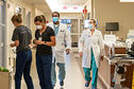
Biased behavior by patients toward physicians and other staff, such as nurses and social workers, has become more prevalent at hospitals across the nation, including at Northwestern Medicine. A new systemwide NM policy lays out a simple process for staff and leaders to respond to and report such incidents.
The new policy is only a beginning step, says Alison Bodor, MBA, MS OTR/L, NM’s program director for Diversity and Inclusion. The policy and the guidance it includes will be refined with feedback, and more support is in the works, including further training for leaders and peer-support programs for physicians.
NMNM policy about biased patient behavior
You may access the policy and related information on NM Interactive (login required) at the Diversity and Inclusion page Patient Bias Towards Staff.
The policy states that NM will not tolerate offensive or inappropriate requests, actions, comments and behavior from patients or their family members toward staff related to any of the following factors:
The policy outlines procedural responsibilities — including reporting in NETS and manager responsibility to provide immediate support — and supplies sample scripting to address patient bias.
Bodor worked on the policy in close partnership with Aashish K. Didwania, MD, vice chair for education in the Department of Medicine at Northwestern University Feinberg School of Medicine, and with other physicians across the health system.
Effect of patient bias incidents
One catalyst for the policy was a patient bias incident experienced by Quentin R. Youmans, MD, when he was a resident at NM. A patient who did not want to be discharged became increasingly belligerent and directed a racial slur toward Dr. Youmans.
Dr. Youmans, who is now a cardiovascular fellow at NM, wrote about the experience in the Annals of Internal Medicine (2019;171:380-381. doi:10.7326/M19-1269). His program director at the time was Dr. Didwania.
For both physicians, the event underscored the need to provide more guidance on handling such events. “I felt helpless and powerless, and a little incredulous,” says Dr. Youmans. “While you know racism and other biases exist, you hope that your years of training will move you beyond them. I left the room, and the other team members spoke with the patient. But it’s really hard to know how to respond. You want to keep open the lines of communication, but you also want to set boundaries to protect trainees, the rest of the staff and yourself.”
The new policy is only a beginning step, says Alison Bodor, MBA, MS OTR/L, NM’s program director for Diversity and Inclusion. The policy and the guidance it includes will be refined with feedback, and more support is in the works, including further training for leaders and peer-support programs for physicians.
NMNM policy about biased patient behavior
You may access the policy and related information on NM Interactive (login required) at the Diversity and Inclusion page Patient Bias Towards Staff.
The policy states that NM will not tolerate offensive or inappropriate requests, actions, comments and behavior from patients or their family members toward staff related to any of the following factors:
- Age
- Race, color or national origin
- Religion, culture or language
- Physical or mental disability
- Socioeconomic status
- Sex
- Sexual orientation
- Gender identity or expression
- Military or veteran status
The policy outlines procedural responsibilities — including reporting in NETS and manager responsibility to provide immediate support — and supplies sample scripting to address patient bias.
Bodor worked on the policy in close partnership with Aashish K. Didwania, MD, vice chair for education in the Department of Medicine at Northwestern University Feinberg School of Medicine, and with other physicians across the health system.
Effect of patient bias incidents
One catalyst for the policy was a patient bias incident experienced by Quentin R. Youmans, MD, when he was a resident at NM. A patient who did not want to be discharged became increasingly belligerent and directed a racial slur toward Dr. Youmans.
Dr. Youmans, who is now a cardiovascular fellow at NM, wrote about the experience in the Annals of Internal Medicine (2019;171:380-381. doi:10.7326/M19-1269). His program director at the time was Dr. Didwania.
For both physicians, the event underscored the need to provide more guidance on handling such events. “I felt helpless and powerless, and a little incredulous,” says Dr. Youmans. “While you know racism and other biases exist, you hope that your years of training will move you beyond them. I left the room, and the other team members spoke with the patient. But it’s really hard to know how to respond. You want to keep open the lines of communication, but you also want to set boundaries to protect trainees, the rest of the staff and yourself.”
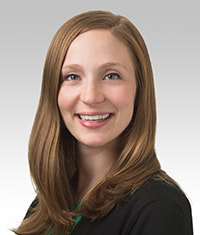
On a national basis, nearly 60% of physicians responding to a 2017 survey by WebMD/Medscape reported having had experiences within the prior five years in which patients made offensive comments related to the physician’s age, race, ethnicity, gender or religion.
Patient bias incidents can leave physicians feeling traumatized, disenfranchised, ashamed and exhausted. “There is good evidence that these events have significant emotional impact, even on very experienced physicians,” says Julia L. Vermylen, MD, MPH, a palliative medicine physician in Northwestern Medical Group.
Dr. Vermylen is a member of the FY21 Scholars of Wellness cohort, a professional development program at NM focused on physician-led wellness projects. For her project, Dr. Vermylen is examining the effect of patient bias and contributing to the development of further support for the NM policy.
Gathering a focus group of 10 NM physicians, she found that all 10 of them reported experiencing such events at least a few times a year, and three of the 10 reported experiencing such events on a monthly basis. “This is consistent with national data,” says Dr. Vermylen. “This is a national problem. It happens everywhere, and it happens on different levels, from small comments to much larger incidents.”
For example, Dr. Vermylen has had patients assume she is not a physician, even after introductions, and has been sexually harassed and physically threatened by patients.
While expressions of bias based on gender or race are among the most common, bias can be experienced in many forms. “Every member of the team could experience patient bias at one point or another,” says Dr. Youmans. Often the people in the best position to help at that moment are other team members, not the individual targeted by bias. “In the policy, there is nice simple scripting to help people respond if they are subjected to bias, or if they are witnesses to it and able to act as allies,” Dr. Youmans says.
A platform for further action
By explicitly stating that NM will not tolerate biased behavior toward staff, the health system has created a platform for further action.
“This policy is one piece of a larger effort underway,” says Dr. Vermylen. “It sends a clear message, sets expectations for patients and managers, and hopefully will allow individuals affected by patient bias to know that the organization supports them.”
Dr. Vermylen and Dr. Youmans urge physicians to review the policy and scripting and to report patient bias incidents. “With reporting, we can look at prevalence and patterns, and take more informed actions to decrease these incidents,” Dr. Youmans says.
Patient bias incidents can leave physicians feeling traumatized, disenfranchised, ashamed and exhausted. “There is good evidence that these events have significant emotional impact, even on very experienced physicians,” says Julia L. Vermylen, MD, MPH, a palliative medicine physician in Northwestern Medical Group.
Dr. Vermylen is a member of the FY21 Scholars of Wellness cohort, a professional development program at NM focused on physician-led wellness projects. For her project, Dr. Vermylen is examining the effect of patient bias and contributing to the development of further support for the NM policy.
Gathering a focus group of 10 NM physicians, she found that all 10 of them reported experiencing such events at least a few times a year, and three of the 10 reported experiencing such events on a monthly basis. “This is consistent with national data,” says Dr. Vermylen. “This is a national problem. It happens everywhere, and it happens on different levels, from small comments to much larger incidents.”
For example, Dr. Vermylen has had patients assume she is not a physician, even after introductions, and has been sexually harassed and physically threatened by patients.
While expressions of bias based on gender or race are among the most common, bias can be experienced in many forms. “Every member of the team could experience patient bias at one point or another,” says Dr. Youmans. Often the people in the best position to help at that moment are other team members, not the individual targeted by bias. “In the policy, there is nice simple scripting to help people respond if they are subjected to bias, or if they are witnesses to it and able to act as allies,” Dr. Youmans says.
A platform for further action
By explicitly stating that NM will not tolerate biased behavior toward staff, the health system has created a platform for further action.
“This policy is one piece of a larger effort underway,” says Dr. Vermylen. “It sends a clear message, sets expectations for patients and managers, and hopefully will allow individuals affected by patient bias to know that the organization supports them.”
Dr. Vermylen and Dr. Youmans urge physicians to review the policy and scripting and to report patient bias incidents. “With reporting, we can look at prevalence and patterns, and take more informed actions to decrease these incidents,” Dr. Youmans says.






© 2024 by Northwestern Medicine® and Northwestern Memorial HealthCare. Northwestern Medicine® is a trademark of Northwestern Memorial HealthCare.

|
Northwestern Memorial
312.926.2000 |
Central DuPage
630.933.1600 |
Lake Forest
847.234.5600 |
Delnor
630.208.3000 |
Kishwaukee
815.756.1521 |
Valley West
815.786.8484 |
Marianjoy
630.909.8000 |
|
©2024 by Northwestern Medicine® and Northwestern Memorial HealthCare. Northwestern Medicine® is a trademark of Northwestern Memorial HealthCare, used by Northwestern University.
|
|