Peter Lee, MD, Performs NM’s First Endoscopic Discectomy
September 24, 2020 | 2 min. to read
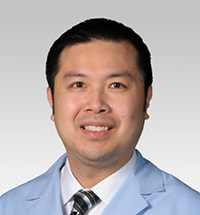
During the COVID-19 pandemic, NM Regional Medical Group Neurosurgeon Peter Lee, MD, started treating a 57-year-old man who was experiencing severe lower-back pain with numbness and tingling in his legs associated with a sizable upper lumbar disc herniation. Through regular telehealth video visits, Dr. Lee and his team managed the patient’s condition conservatively, but his symptoms continued to worsen. With the reactivation of the health system, Dr. Lee brought the patient into the office for a physical evaluation.
“The patient needed surgery,” says Dr. Lee. “The disc herniation had led to spinal stenosis, a significant narrowing of the spinal canal, which was compressing his nerves and ligaments.” Dr. Lee offered him a traditional minimally invasive microdiscectomy, which is the industry standard for treating this condition. However, because the patient is relatively young and active, he wasn’t interested: he wanted an option that was less invasive.
“The patient was concerned that bone removal required to access the herniation, which is part of a traditional minimally invasive microdiscectomy, would lead to chronic back pain and instability,” Dr. Lee explains. “In patients with an upper lumbar disc herniation that requires surgery, as many as 20% to 30% of patients will require a spinal fusion to prevent instability."
There was another option that had not yet been performed by Dr. Lee or any surgeon at NM: full endoscopic spinal surgery. The innovative procedure uses an endoscope the size of a No. 2 pencil, which is small enough to access the herniated disc without causing collateral damage to the skeletal structure. Dr. Lee traveled to Germany several years ago to train with one of the surgeons who pioneered it.
“The endoscope is placed through the patient's natural bony openings to remove the disc herniation without having to remove any bone whatsoever,” says Dr. Lee. “While this form of full endoscopic spine surgery is common in Germany and Asia, it is not yet common in the U.S., and it had yet to be performed at Northwestern Medicine.”
With the advanced endoscopic imaging available at Central DuPage Hospital, Dr. Lee believed the surgery would be a success and would provide significant relief to his patient. Understanding his options and risks, the patient opted to move forward with the new procedure. The CDH surgical staff worked in conjunction with Germany-based RIWO-spine to make the surgery possible, and on June 24, Dr. Lee and his team at CDH successfully performed the first full endoscopic spinal surgery at NM.
“The procedure was a tremendous success,” Dr. Lee says. “The patient had relief of his symptoms immediately following surgery with no post-operative pain, and he did not require any pain medication afterward. The speed at which the patient improved and the fact that no pain medications were required after surgery was truly amazing.”
Three months later, the patient has fully recovered and remains pain-free. Dr. Lee is hoping to introduce the technique to other physicians at CDH and across NM so that even more patients can benefit from the procedure.
“This is a new surgery that requires a new skill set,” explains Dr. Lee. “We are currently looking at ways to train more surgeons on the technique and to also tackle more challenging conditions to help a broader group of patients with severe back problems. As a minimally invasive surgeon, I am always looking for new ways to bring more advanced techniques to my patients, decrease post-operative pain, speed recovery and avoid long-term complications.”
Congratulations to Dr. Lee and his entire spinal surgery team at CDH. By leveraging leading-edge medicine as well as telehealth video technology, they were able to not only treat the patient during a pandemic, but offer a new, advanced procedure that had never been performed at NM.
“The patient needed surgery,” says Dr. Lee. “The disc herniation had led to spinal stenosis, a significant narrowing of the spinal canal, which was compressing his nerves and ligaments.” Dr. Lee offered him a traditional minimally invasive microdiscectomy, which is the industry standard for treating this condition. However, because the patient is relatively young and active, he wasn’t interested: he wanted an option that was less invasive.
“The patient was concerned that bone removal required to access the herniation, which is part of a traditional minimally invasive microdiscectomy, would lead to chronic back pain and instability,” Dr. Lee explains. “In patients with an upper lumbar disc herniation that requires surgery, as many as 20% to 30% of patients will require a spinal fusion to prevent instability."
There was another option that had not yet been performed by Dr. Lee or any surgeon at NM: full endoscopic spinal surgery. The innovative procedure uses an endoscope the size of a No. 2 pencil, which is small enough to access the herniated disc without causing collateral damage to the skeletal structure. Dr. Lee traveled to Germany several years ago to train with one of the surgeons who pioneered it.
“The endoscope is placed through the patient's natural bony openings to remove the disc herniation without having to remove any bone whatsoever,” says Dr. Lee. “While this form of full endoscopic spine surgery is common in Germany and Asia, it is not yet common in the U.S., and it had yet to be performed at Northwestern Medicine.”
With the advanced endoscopic imaging available at Central DuPage Hospital, Dr. Lee believed the surgery would be a success and would provide significant relief to his patient. Understanding his options and risks, the patient opted to move forward with the new procedure. The CDH surgical staff worked in conjunction with Germany-based RIWO-spine to make the surgery possible, and on June 24, Dr. Lee and his team at CDH successfully performed the first full endoscopic spinal surgery at NM.
“The procedure was a tremendous success,” Dr. Lee says. “The patient had relief of his symptoms immediately following surgery with no post-operative pain, and he did not require any pain medication afterward. The speed at which the patient improved and the fact that no pain medications were required after surgery was truly amazing.”
Three months later, the patient has fully recovered and remains pain-free. Dr. Lee is hoping to introduce the technique to other physicians at CDH and across NM so that even more patients can benefit from the procedure.
“This is a new surgery that requires a new skill set,” explains Dr. Lee. “We are currently looking at ways to train more surgeons on the technique and to also tackle more challenging conditions to help a broader group of patients with severe back problems. As a minimally invasive surgeon, I am always looking for new ways to bring more advanced techniques to my patients, decrease post-operative pain, speed recovery and avoid long-term complications.”
Congratulations to Dr. Lee and his entire spinal surgery team at CDH. By leveraging leading-edge medicine as well as telehealth video technology, they were able to not only treat the patient during a pandemic, but offer a new, advanced procedure that had never been performed at NM.






© 2024 by Northwestern Medicine® and Northwestern Memorial HealthCare. Northwestern Medicine® is a trademark of Northwestern Memorial HealthCare.

|
Northwestern Memorial
312.926.2000 |
Central DuPage
630.933.1600 |
Lake Forest
847.234.5600 |
Delnor
630.208.3000 |
Kishwaukee
815.756.1521 |
Valley West
815.786.8484 |
Marianjoy
630.909.8000 |
|
©2024 by Northwestern Medicine® and Northwestern Memorial HealthCare. Northwestern Medicine® is a trademark of Northwestern Memorial HealthCare, used by Northwestern University.
|
|