Critical Care Collaboration Crucial to NMH Response
As St. Patrick’s Day crowds elevated fears about exponential growth in COVID-19 cases, critical care leaders at Northwestern Memorial Hospital began meeting online to address a major challenge: How could they possibly staff for as many ICU patients as projected?
As of March 13, the day before the first large St. Patrick’s Day celebrations, Illinois had identified 46 cases. Seven days later, the reported total had climbed to 585, and Gov. J.B. Pritzker issued a stay-at-home order. Soon after, NMH critical care leaders had plans ready to address a range of scenarios.
If the worst case came true, those plans would allow NMH to staff up to 180 COVID-19 ICU beds, the high end of projected ICU demand and six times the usual Medical ICU census. COVID-19 ICUs would extend into operating rooms, and 20 teams of staff physicians, residents and fellows would oversee them, drawn from all five critical care divisions at NMH — Pulmonary, Cardiology, Anesthesiology, Surgery and Neurology.
“To actually staff 20 teams would have been a huge challenge,” says Richard G. Wunderink, MD, medical director of the MICU at NMH and a professor of medicine in Pulmonary and Critical Care at Northwestern University Feinberg School of Medicine. “It would have meant using almost everyone from every service. It was great to have the plans, and great not to have to use them.”
The COVID-19 ICU census at NMH peaked at 90 — triple the usual peak MICU volume. Six teams were used, consisting of critical care physicians from Pulmonary, Cardiology and Anesthesiology. The hospital created three COVID-19 ICUs, taking over an observation and medicine unit, and relocating the MICU and Neuro ICU to other locations in the hospital. If a few more patients had needed critical care, NMH would have had to activate a seventh team and create a fourth COVID-19 ICU location, triggering another chain of relocations.
Although their teams were not actively deployed, critical care physicians in Surgery and Neurology rounded on COVID-19 patients to learn about the disease. In addition, those physicians, along with their colleagues in Cardiac Critical Care, were credentialed and given privileges at all Northwestern Medicine hospitals so they could provide ICU support anywhere needed.
As of early August, one team was still active, and the NMH COVID-19 ICU census was about 12 patients. If a future surge occurs, the planning done in spring will provide a foundation for building capacity.
A ‘once-in-a-career’ situation
With Pulmonary Critical Care expected to be the primary specialty involved in severe COVID-19 cases, Dr. Wunderink took the lead in planning, drawing on crisis-preparedness principles and past exercises. Unlike a drill, “this was worrying about whether actual patients would survive, and about actual risks to our healthcare team,” he says. “I think my happiest day during all this was when we extubated a patient early on. At that point, to have a patient get off the ventilator was so encouraging.”
The COVID-19 crisis is unique because of its scale, says James D. Flaherty, MD, medical director of the Coronary Care Unit at NMH and an associate professor of medicine in Interventional Cardiology at Feinberg School of Medicine. “There was a spirit of collaboration, and a lot of people were willing to help,” Dr. Flaherty says. “The strategy Rich quarterbacked was very thoughtful and effective, but this is, we hope, a once-in-a-career situation.”
An overwhelming number of patients with one common illness would strain a limited pool of specialists. Dr. Wunderink approached the challenge in terms of expanding rings of involvement:
The initial intent was to assign one team to 15 patients. That was increased to 20 patients as physicians gained experience with the disease and some aspects of care were standardized.
A triumph of teamwork
The critical care divisions have a history of collaboration — rotating through fellows, participating on a Health System Clinical Collaborative, and developing combined conferences and simulation training — but the COVID-19 response called for an elevated level of teamwork.
In addition to Dr. Wunderink and Dr. Flaherty, the core planning for ICU care involved:
Meanwhile, Albert C. Lin, MD, a cardiac electrophysiologist at NMH and associate professor of medicine in Cardiology at Feinberg, coordinated a multidisciplinary central line team from Cardiology, Surgery and Interventional Radiology to come into ICUs on a schedule and place central and arterial lines, relieving the COVID-19 teams of the time-consuming procedure.
A specialized team from Anesthesiology Critical Care was anticipated to manage care for one group of patients. With a shortage of ventilators feared, the idea was that the team would then be prepared to oversee a new ICU in which anesthesia equipment would substitute for ventilators. The concern was alleviated by the acquisition of additional ventilators during the crisis.
Particularly valuable was the subspecialties’ clinical collaboration, which Dr. Wunderink believes led to improved outcomes. For example, twice daily, a physician from Pulmonary Critical Care and one from Anesthesiology Critical Care met jointly with hospitalists on the general COVID-19 floors to identify patients likely to deteriorate and need ICU care, and to strategize early intervention. Working with the MICU team, Neuro Critical Care physicians Ayush Batra, MD, and Eric M. Liotta, MD, created a sedation protocol to treat the severe encephalopathy encountered in some patients. In another example, as more teams were activated, Pulmonary Critical Care attending physicians were assigned to teams of Cardiology attending physicians, and vice versa, to more easily share their expertise.
“It’s unusual for so many disciplines to come together in so many ways,” says Dr. Ault. “But there is a lot of value in combining people who have a common critical care skillset but different subspecialties. Working like this, everyone could contribute their expertise and enhance the whole.”
As of March 13, the day before the first large St. Patrick’s Day celebrations, Illinois had identified 46 cases. Seven days later, the reported total had climbed to 585, and Gov. J.B. Pritzker issued a stay-at-home order. Soon after, NMH critical care leaders had plans ready to address a range of scenarios.
If the worst case came true, those plans would allow NMH to staff up to 180 COVID-19 ICU beds, the high end of projected ICU demand and six times the usual Medical ICU census. COVID-19 ICUs would extend into operating rooms, and 20 teams of staff physicians, residents and fellows would oversee them, drawn from all five critical care divisions at NMH — Pulmonary, Cardiology, Anesthesiology, Surgery and Neurology.
“To actually staff 20 teams would have been a huge challenge,” says Richard G. Wunderink, MD, medical director of the MICU at NMH and a professor of medicine in Pulmonary and Critical Care at Northwestern University Feinberg School of Medicine. “It would have meant using almost everyone from every service. It was great to have the plans, and great not to have to use them.”
The COVID-19 ICU census at NMH peaked at 90 — triple the usual peak MICU volume. Six teams were used, consisting of critical care physicians from Pulmonary, Cardiology and Anesthesiology. The hospital created three COVID-19 ICUs, taking over an observation and medicine unit, and relocating the MICU and Neuro ICU to other locations in the hospital. If a few more patients had needed critical care, NMH would have had to activate a seventh team and create a fourth COVID-19 ICU location, triggering another chain of relocations.
Although their teams were not actively deployed, critical care physicians in Surgery and Neurology rounded on COVID-19 patients to learn about the disease. In addition, those physicians, along with their colleagues in Cardiac Critical Care, were credentialed and given privileges at all Northwestern Medicine hospitals so they could provide ICU support anywhere needed.
As of early August, one team was still active, and the NMH COVID-19 ICU census was about 12 patients. If a future surge occurs, the planning done in spring will provide a foundation for building capacity.
A ‘once-in-a-career’ situation
With Pulmonary Critical Care expected to be the primary specialty involved in severe COVID-19 cases, Dr. Wunderink took the lead in planning, drawing on crisis-preparedness principles and past exercises. Unlike a drill, “this was worrying about whether actual patients would survive, and about actual risks to our healthcare team,” he says. “I think my happiest day during all this was when we extubated a patient early on. At that point, to have a patient get off the ventilator was so encouraging.”
The COVID-19 crisis is unique because of its scale, says James D. Flaherty, MD, medical director of the Coronary Care Unit at NMH and an associate professor of medicine in Interventional Cardiology at Feinberg School of Medicine. “There was a spirit of collaboration, and a lot of people were willing to help,” Dr. Flaherty says. “The strategy Rich quarterbacked was very thoughtful and effective, but this is, we hope, a once-in-a-career situation.”
An overwhelming number of patients with one common illness would strain a limited pool of specialists. Dr. Wunderink approached the challenge in terms of expanding rings of involvement:
- First, expand services using Pulmonary Critical Care specialists.
- Second, should ICU demand exceed that capacity, involve teams from Anesthesia Critical Care and the CCU whose expertise is the next closest fit with the disease. These teams also would include Pulmonary Critical Care fellows to supplement experience.
- Lastly, use mixed-specialty teams that combine physicians now experienced in treating COVID-19 with critical care specialists newly drawn from Cardiology, Surgery and Neurology.
The initial intent was to assign one team to 15 patients. That was increased to 20 patients as physicians gained experience with the disease and some aspects of care were standardized.
A triumph of teamwork
The critical care divisions have a history of collaboration — rotating through fellows, participating on a Health System Clinical Collaborative, and developing combined conferences and simulation training — but the COVID-19 response called for an elevated level of teamwork.
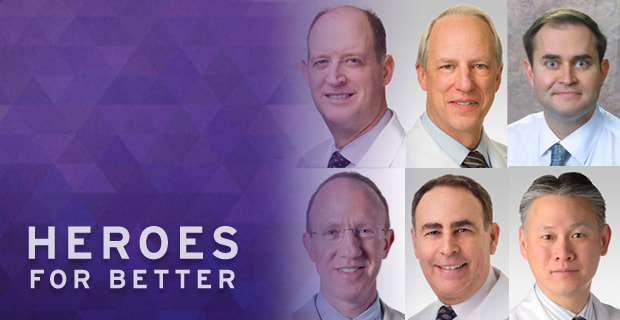
In addition to Dr. Wunderink and Dr. Flaherty, the core planning for ICU care involved:
- Michael L. Ault, MD, medical director of the NMH Emergency Response Team, chief of Critical Care in the Department of Anesthesiology, and an associate professor of anesthesiology, medical education, neurological surgery and surgery at Feinberg
- Michael B. Shapiro, MD, chief of Trauma and Critical Care Surgery in the Department of Surgery and a professor of surgery at Feinberg
- Edward M. Manno, MD, vice chair for Clinical Affairs in the Department of Neurology and a professor of neurology and seurological surgery at Feinberg
Meanwhile, Albert C. Lin, MD, a cardiac electrophysiologist at NMH and associate professor of medicine in Cardiology at Feinberg, coordinated a multidisciplinary central line team from Cardiology, Surgery and Interventional Radiology to come into ICUs on a schedule and place central and arterial lines, relieving the COVID-19 teams of the time-consuming procedure.
A specialized team from Anesthesiology Critical Care was anticipated to manage care for one group of patients. With a shortage of ventilators feared, the idea was that the team would then be prepared to oversee a new ICU in which anesthesia equipment would substitute for ventilators. The concern was alleviated by the acquisition of additional ventilators during the crisis.
Particularly valuable was the subspecialties’ clinical collaboration, which Dr. Wunderink believes led to improved outcomes. For example, twice daily, a physician from Pulmonary Critical Care and one from Anesthesiology Critical Care met jointly with hospitalists on the general COVID-19 floors to identify patients likely to deteriorate and need ICU care, and to strategize early intervention. Working with the MICU team, Neuro Critical Care physicians Ayush Batra, MD, and Eric M. Liotta, MD, created a sedation protocol to treat the severe encephalopathy encountered in some patients. In another example, as more teams were activated, Pulmonary Critical Care attending physicians were assigned to teams of Cardiology attending physicians, and vice versa, to more easily share their expertise.
“It’s unusual for so many disciplines to come together in so many ways,” says Dr. Ault. “But there is a lot of value in combining people who have a common critical care skillset but different subspecialties. Working like this, everyone could contribute their expertise and enhance the whole.”






© 2024 by Northwestern Medicine® and Northwestern Memorial HealthCare. Northwestern Medicine® is a trademark of Northwestern Memorial HealthCare.

|
Northwestern Memorial
312.926.2000 |
Central DuPage
630.933.1600 |
Lake Forest
847.234.5600 |
Delnor
630.208.3000 |
Kishwaukee
815.756.1521 |
Valley West
815.786.8484 |
Marianjoy
630.909.8000 |
|
©2024 by Northwestern Medicine® and Northwestern Memorial HealthCare. Northwestern Medicine® is a trademark of Northwestern Memorial HealthCare, used by Northwestern University.
|
|